
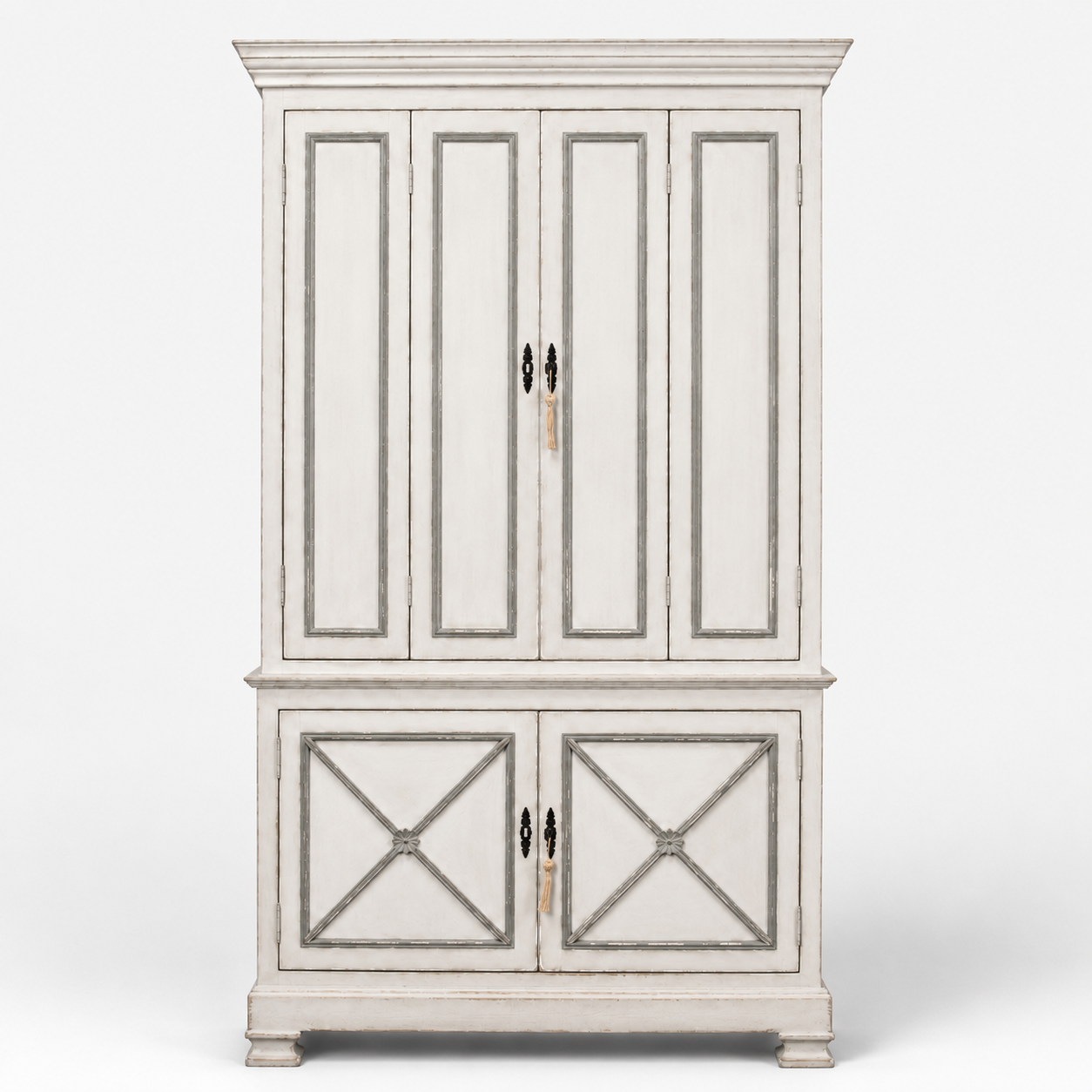
Furniture Finishing Explained: Water-Based Paint, Wood Wax Oil and Colour Consistency
What this guide covers
- What a finish actually has to do
- Water-based paint: the modern export standard
- Natural wood wax oil: tactile, repairable, natural
- Surface preparation — where most finish problems begin
- Colour consistency across a batch
- Curing, packing and the "new furniture smell" question
- Specifying a finish you can hold a supplier to
- Conclusion
What a finish actually has to do
Buyers often evaluate a finish by appearance alone, but a finish is doing several jobs at once, and they can conflict with each other:
- Protect the substrate from water, alcohol, oils and everyday abrasion.
- Control moisture exchange, slowing the rate at which the timber absorbs and releases water vapour.
- Deliver the intended appearance — colour, sheen, grain definition, or an opaque painted surface.
- Satisfy regulatory limits on volatile organic compounds (VOCs) in the destination market.
- Remain repairable to a practical degree, since furniture will be scratched and dented in use.
The trade-off is real. A hard, highly cross-linked film resists scratching but tends to crack when the timber beneath it moves. A softer, more elastic film moves with the wood but marks more easily. The choice of system is therefore a decision about which failure mode is acceptable for the intended use — not a search for a universally superior product.
Water-based paint: the modern export standard
Water-based coatings use water as the carrier rather than organic solvents. For export furniture they have become the default for three practical reasons: lower VOC content, faster and more predictable drying, and better colour repeatability across a production run.
How the system is built up
A water-based finish is applied in layers, and each layer has a job:
| Layer | Purpose | What goes wrong if skipped |
|---|---|---|
| Sand & prepare | Level the surface, remove machining marks | Scratches telegraph through the topcoat |
| Sealer / primer | Raise and lock the grain, control absorption | Patchy colour; finish sinks unevenly |
| Colour coat | Establish the specified tone | Colour drifts between panels |
| Topcoat(s) | Provide protection and the specified sheen | Low wear resistance, visible sheen variation |
Between coats, the surface is lightly sanded or de-nibbed. This step is unglamorous and frequently abbreviated under schedule pressure — and it is one of the most common reasons a finish feels rough compared with an approved sample.
Drying conditions matter as much as the product. Water-based coatings need adequate air movement, controlled temperature and controlled relative humidity to coalesce properly into a continuous film. Applied in a cold or damp environment, the coating may look dry but never reach full hardness, and the problem only surfaces after the furniture has been in a warm room for a few weeks.
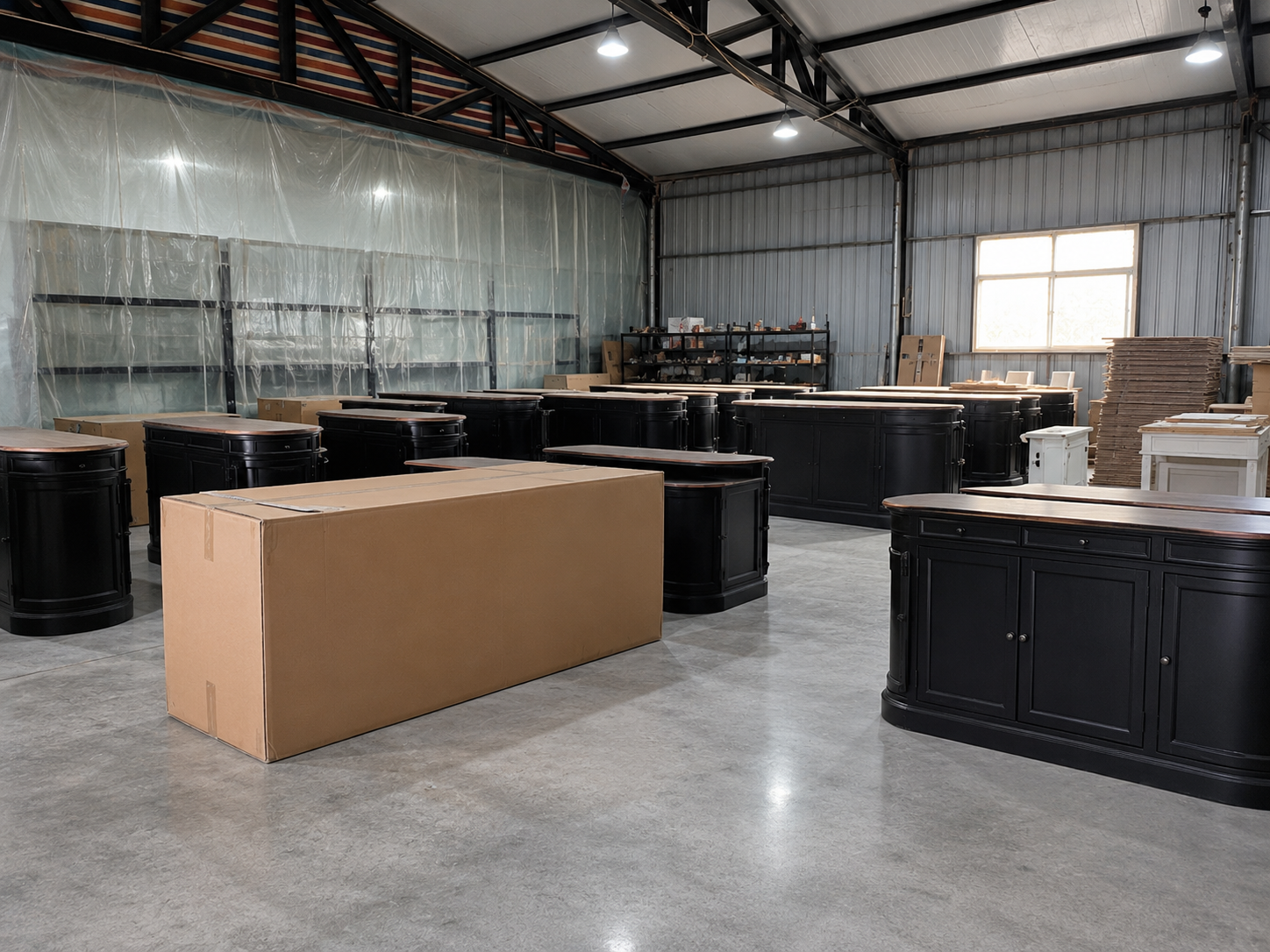
Natural wood wax oil: tactile, repairable, natural
Wood wax oil is absorbed into the timber rather than forming a film on top of it. The result is a surface that still feels like wood — the grain remains open to the touch, and the piece reads as natural rather than coated.
The advantages are practical, not only aesthetic:
- Repairability. A scratch or a water ring on a wax-oiled surface can usually be sanded locally and re-oiled, blending invisibly, without respraying the whole panel.
- Low odour and low solvent content. Typically solvent-free or near-solvent-free, which suits interiors that are occupied soon after installation.
- Depth of grain. Oil penetrates and darkens the fibre at depth, giving figure and texture a richness that a thin film does not always replicate.
The trade-offs should be stated honestly. Film protection is lower, so wax-oiled tabletops need more care than lacquered ones — coasters and prompt wiping of spills are genuinely advisable. Maintenance is periodic rather than never, typically re-oiling as the surface begins to look dry. And the appearance varies more from board to board, because the oil responds to each piece of timber individually. For a buyer seeking absolute uniformity across forty identical units, that variability is a drawback; for a buyer seeking character, it is the point.
Surface preparation — where most finish problems begin
Most finish defects are traceable not to the coating but to the preparation underneath it. Three preparation variables account for a large share of complaints.
1. The sanding sequence
Sanding progresses through a sequence of grits, and the intermediate steps are not optional. Each stage removes the scratch pattern left by the previous one. If a step is skipped, coarser scratches remain beneath the surface and only become visible once a wet coating fills and magnifies them. This is why a piece can look perfect in the white and show a scratch pattern the moment the sealer goes on.
2. Moisture content of the substrate
Coating timber that is still too wet traps moisture beneath the film. As the timber equalises with its surroundings, that moisture migrates, and the result can be blistering, adhesion loss or a white haze under the finish. Establishing the moisture content before finishing — not after — is a basic process control.
3. Shop environment
Airborne dust is the enemy of any film finish. Finishing areas are kept separate from machining areas for exactly this reason. A visible speck of dust bonded into a topcoat cannot be removed without sanding back through the layer, so prevention is the only economical strategy.
Colour consistency across a batch
When an order comprises forty matching cabinets, "the same colour" means several different things, and it helps to separate them:
- Batch-to-batch consistency — today's production matches the approved sample from last month.
- Unit-to-unit consistency — the forty cabinets match each other.
- Panel-to-panel consistency — within one cabinet, the doors, sides and top all match.
- Colour under the client's lighting — the piece looks as intended in the room where it will live.
Control measures focus on standardising the variables that drive colour shift: using a single coating batch within a run, controlling film thickness so tone does not drift with build, keeping spray settings and operator technique consistent, and comparing panels under standardised lighting rather than under whatever light happens to be in the workshop.
The lighting point deserves emphasis. Colour assessed under tungsten light can look materially different under daylight or under the cool white lighting common in retail interiors. When colour is critical, the realistic approach is to approve the sample under lighting that resembles the final installation — or to accept that a modest shift between workshop and showroom is normal rather than a defect.
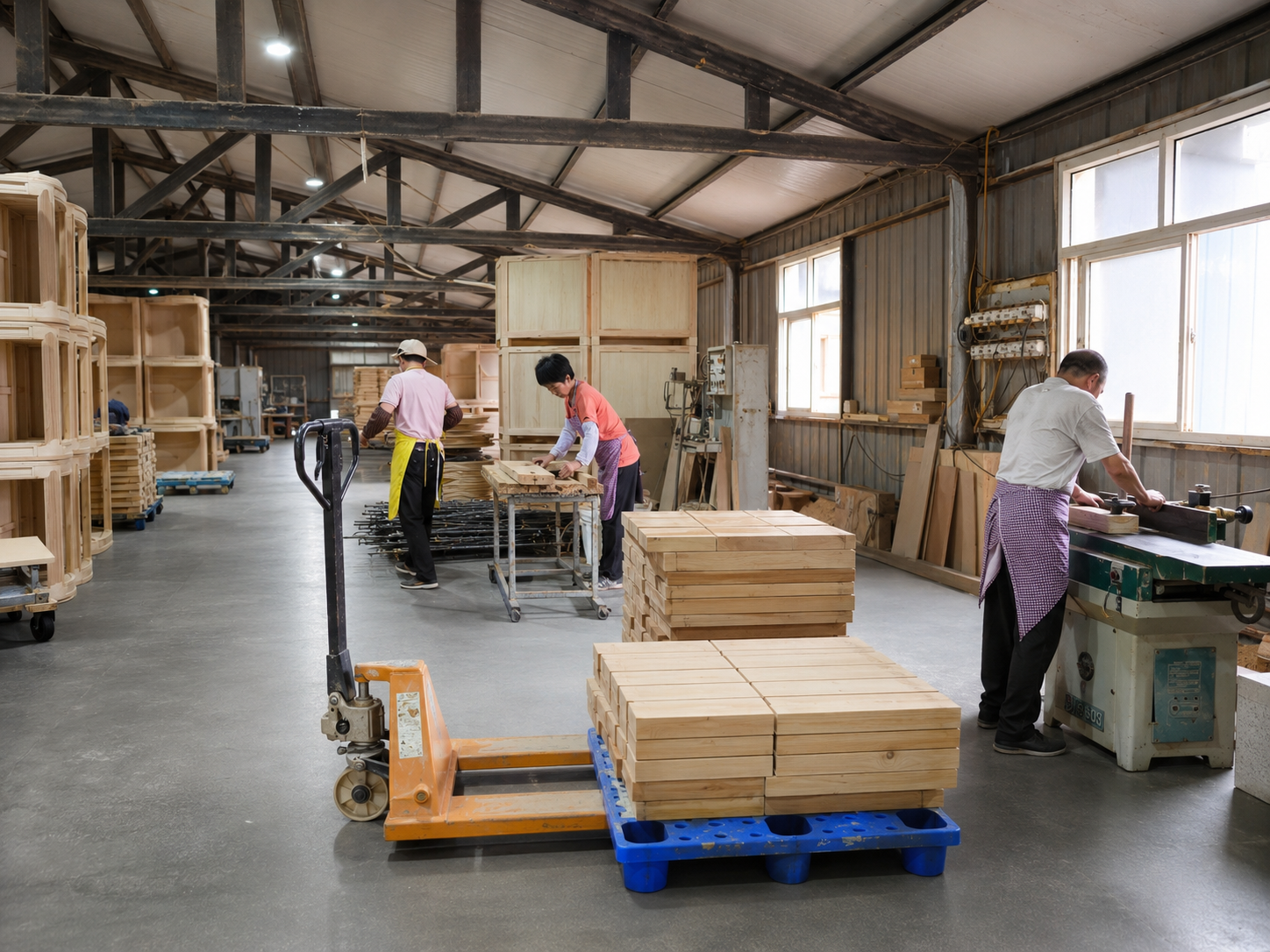
Curing, packing and the "new furniture smell" question
A finish that is dry to the touch is not necessarily cured. Touch-dry describes the surface; full cure is the chemical cross-linking that delivers final hardness, adhesion and resistance. Packing furniture before it has properly cured is a classic cause of problems discovered on arrival: finish sticking to the packaging film, imprint marks from wrapping, and a persistent odour on unboxing.
The odour question is worth addressing directly, because it is one of the most common buyer concerns and is sometimes conflated with VOCs. They are related but distinct. VOCs are regulated compounds emitted as the coating dries and cures; odour is a sensory experience, and a low-VOC coating can still have a noticeable smell while curing. Practical mitigation is straightforward — allow a proper curing period before packing, and use packaging that permits some air exchange rather than sealing the piece in a fully airtight wrap immediately.
Specifying a finish you can hold a supplier to
Finish specifications often fail because they describe an impression rather than a measurable standard. These items close that gap:
- System type and brand or equivalent — water-based lacquer or wood wax oil, with the product identified.
- Sheen level — matt, satin or gloss, stated as a level rather than an adjective such as "natural".
- Colour reference — a physical approved sample or a specified colour code, with the lighting condition for approval noted.
- Number of coats, or the specified film build, for the topcoat.
- VOC and compliance requirements for the destination market.
- Curing period before packing as a process requirement.
- Touch-up kit — whether matching repair materials are supplied with the order, which matters considerably for wax-oiled pieces in service.
Supplying a touch-up kit alongside wax-oiled furniture is a small detail with outsized effect on end-user satisfaction. Because the finish is repairable, giving the customer the means to repair it converts an eventual scratch from a service call into a five-minute task.
Conclusion
Finishing is the stage where good furniture is most easily undermined, because the failures are delayed. A piece can pass inspection in the workshop and still generate a complaint three months later if the substrate was too wet, the curing period was cut short, or the packing sealed in solvent that had not finished evaporating.
For buyers, the workable approach is to specify the system rather than the appearance: name the coating type, the sheen level, the number of coats, the colour approval condition, and the curing period before packing. For manufacturers, the same list is a process checklist. Finish quality is not produced by the coating itself — it is produced by controlling the nine or ten variables around it.
Talk to us about finishing standards
Hengshui Yuyufeicheng Furniture Co., Ltd. finishes solid wood furniture with water-based paint and natural wood wax oil in a controlled painting room, with an inspection system covering finishing and final testing. We produce for homes, hotels, homestays and commercial projects, and support OEM and custom colour requirements.
Request a quoteFinish systems, sheen levels and colour matching should be confirmed against a physical approved sample. Availability of specific coating products may depend on the destination market's regulatory requirements.