
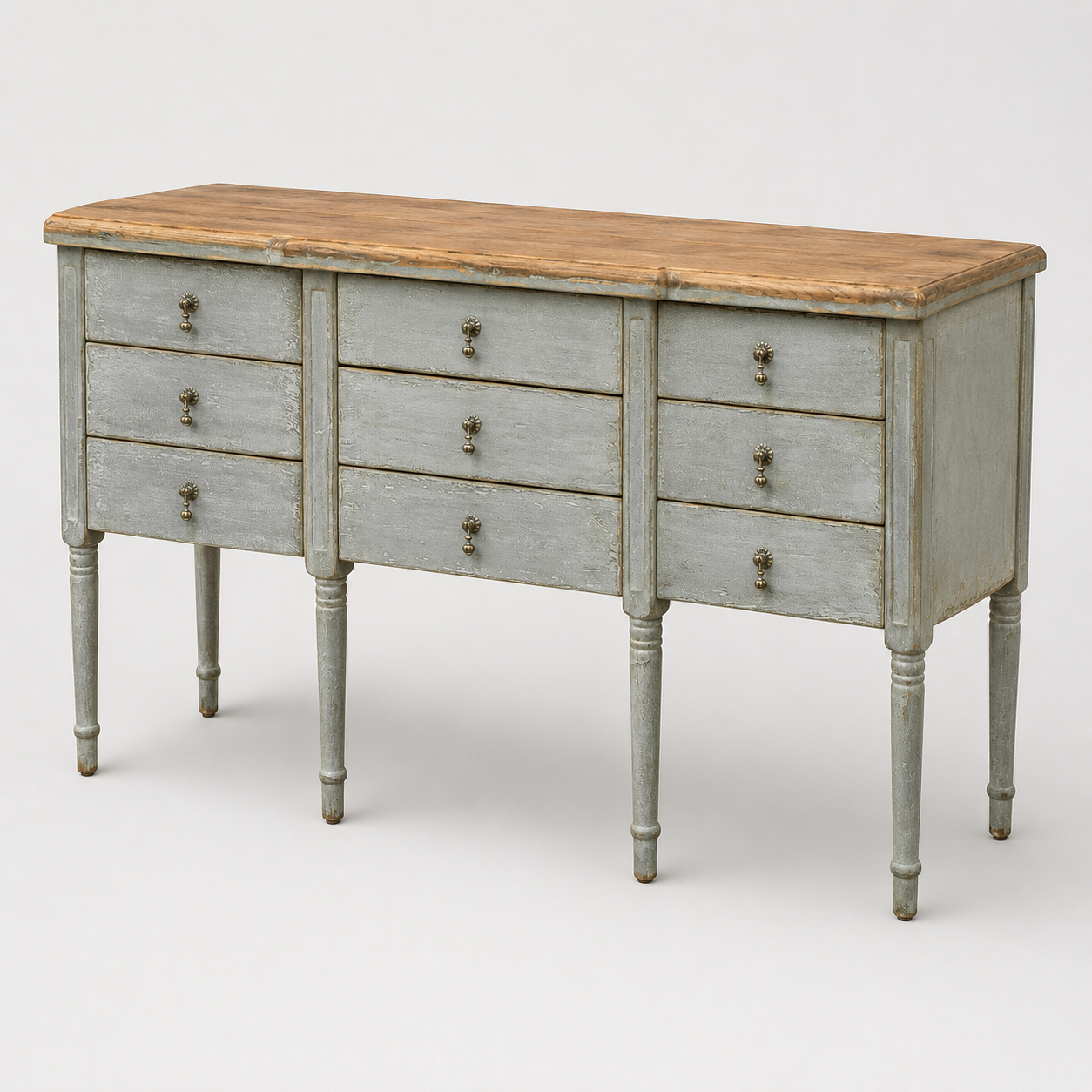
How to Choose Solid Wood Furniture: A Buyer's Guide to Timber, Joinery and Finish
What this guide covers
- Timber species: what each one is actually good at
- Solid wood versus the alternatives — reading the construction
- Joinery: the part most buyers never see
- Finishes: water-based lacquer versus natural wood wax oil
- Moisture content and why it decides whether a piece survives
- A practical evaluation sequence when you inspect a sample
- What to put in a purchase order
- Conclusion
Timber species: what each one is actually good at
No species is universally "best". Each one sits somewhere on a trade-off between hardness, dimensional stability, visual character and cost. The table below compares the species most commonly used in export-oriented solid wood furniture.
| Species | Hardness | Stability | Visual character | Typical use |
|---|---|---|---|---|
| American oak | High | Good | Pronounced open grain, ray flecks | Table tops, cabinets, visible structural parts |
| New Zealand pine | Low–medium | Very good | Even, pale, few knots | Painted and whitewashed ranges, drawer boxes |
| Russian pine | Low–medium | Good | Straight grain, visible knots | Rustic ranges, frames, structural members |
| Elm | Medium–high | Moderate | Strong grain figure, warm tone | Traditional surfaces, distressed and rustic ranges |
Two practical notes sit behind this table. First, hardness is not the same as durability. A softer pine cabinet with sound joinery and a good finish will outlast a poorly built oak piece, because most furniture failures are joint failures rather than crushed wood fibres.
Second, stability matters more than hardness in export furniture. Timber moves as it takes on and releases moisture, and furniture that travels by sea freight crosses significant humidity gradients. Species with good dimensional stability — New Zealand pine in particular — tolerate that journey with less risk of panel movement.
Solid wood versus the alternatives — reading the construction
The term "solid wood" is used loosely in the trade. Before comparing prices, establish which of the following a quotation actually refers to:
- Solid timber throughout — the entire component is cut from one species, with no veneer or core.
- Solid wood frame with engineered panels — the visible frame is solid timber, while large flat surfaces such as cabinet backs and drawer bottoms use plywood or a glued panel. This is normal engineering practice, not a defect.
- Veneered substrate — a thin layer of real wood over MDF or particleboard. It can look excellent, but it is a different product category and should be priced accordingly.
There is a legitimate structural reason for mixing materials. A solid wood panel wider than about 600 mm is prone to movement and cupping across the seasons, so many manufacturers deliberately use an engineered core for large cabinet backs and shelves while keeping the frame, doors and legs in solid timber. When a supplier explains this openly, it is a sign of a manufacturer that understands wood movement rather than one cutting corners.

Joinery: the part most buyers never see
Joinery is where a furniture price is genuinely earned. Two cabinets can look identical from the front and differ by a factor of two in cost, because the internal joints are completely different.
Joints that last decades
- Mortise and tenon — a rectangular tenon fits into a matching mortise. Strong in both compression and racking; the standard for quality frames.
- Dovetail — interlocking angled pins resist being pulled apart in tension. The traditional choice for drawer boxes.
- Finger joint / box joint — a series of square interlocking fingers with a large glue area. Common in drawer boxes as a lower-cost alternative to dovetails.
- Dowelled and glued construction — acceptable when dowels are correctly sized and the glue line is tight; weaker when used alone in a high-stress frame.
What to check
Ask to see an unfinished or disassembled sample, or at minimum the inside of a drawer. Three quick checks:
- Drawer box joints — are the corners dovetailed or finger-jointed, or simply stapled and glued?
- Corner blocks — does the frame have internal corner reinforcement where the legs meet the rails?
- Glue lines — a tight joint shows a thin, even line. Gaps mean the joint is relying on mechanical fasteners alone.

Finishes: water-based lacquer versus natural wood wax oil
The finish determines how the piece feels, how it wears, and in some markets whether it can be sold at all. Two systems dominate export-oriented solid wood furniture.
| Property | Water-based lacquer | Natural wood wax oil |
|---|---|---|
| Appearance | Uniform film, low sheen to satin | Grain stays tactile, natural matte |
| Protection | Good resistance to water and stains | Moderate; absorbed into the fibre rather than a film |
| Repairability | Local repair needs respraying and blending | Local repair is straightforward — re-oil the area |
| VOC / odour | Low, water as the carrier | Very low, typically solvent-free |
| Best suited to | High-traffic surfaces, tabletops, commercial use | Pieces where grain feel matters; homes, hotel and tea room furniture |
Water-based lacquer is the more common choice for export orders because it delivers consistent colour across a batch, dries quickly and meets the low-VOC requirements of most destination markets. Natural wood wax oil is preferred where the design intent is tactile and where the end user is comfortable with periodic re-oiling.
Whichever system is specified, the preparation underneath decides the result. Sanding sequence matters: skipping intermediate grits leaves microscopic scratches that only become visible after the first coat, and cutting corners here is a common cause of finish complaints that emerge weeks after delivery rather than at inspection.
Moisture content and why it decides whether a piece survives
This is the single most under-discussed specification in furniture purchasing. Timber is hygroscopic — it continuously exchanges moisture with the air around it. If a component is machined and assembled at a moisture content far from the equilibrium of its destination, it will move after delivery.
The consequences are predictable and expensive: doors that bind in a humid summer, panels that cup, gaps that open along a glued joint, and finish cracking where the substrate has swollen.
Two follow-on questions are worth asking. First, how is the timber stored between kilning and machining — a climate-controlled area or an open shed? Second, how long does a component rest after machining before assembly? Allowing machined parts to stabilise before final assembly is a hallmark of a controlled process.
A practical evaluation sequence when you inspect a sample
When a sample arrives, work through the piece in a fixed order rather than starting with the parts that are easiest to see. This sequence front-loads the checks that are hardest to fix later.
- Smell it. A strong solvent smell suggests the finish has not fully cured, or a high-solvent system was used. This matters for markets with VOC limits.
- Open every drawer and door. Check joint type, alignment, and whether the runners are metal or wooden.
- Check the back and underside. These surfaces reveal the construction standard. A back panel stapled on with visible gaps is a signal about the rest.
- Press the frame diagonally. A well-built frame resists racking with minimal flex and no creaking.
- Run a hand over the surface. Feel for sanding marks and finish ridges, particularly along edges where a film is easy to build up unevenly.
- Look for grain continuity at edges. This is the solid-versus-veneer check described earlier.
- Check the specification sheet against what you observed: species, moisture content at assembly, finish system, and hardware brand.
What to put in a purchase order
A specification that reads well in a catalogue is not necessarily one that protects a buyer. These are the items that resolve most disputes, and each is worth confirming in writing before production begins:
- Species, by both common and botanical name. "Oak" alone is ambiguous across supply chains.
- Where solid timber is used and where engineered panels are used, component by component.
- Moisture content at assembly, with the measurement method and the equipment used.
- Finish system — type, sheen level, and any VOC or certification requirement of the destination market.
- Joinery standards for structural frames and drawer boxes.
- Hardware specification — brand or an equivalent approved by the buyer, with the runner rating if applicable.
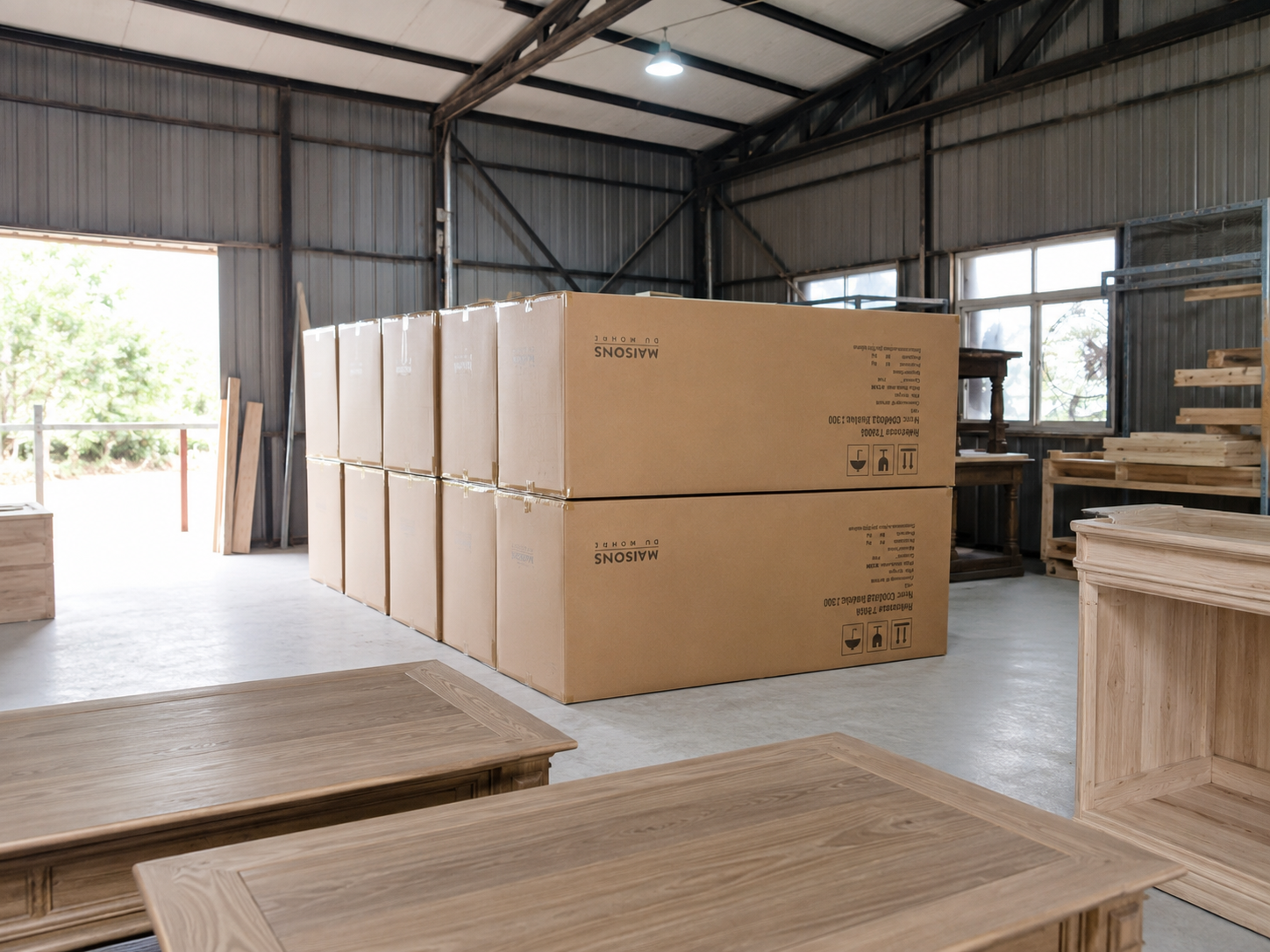
- Inspection and packing standard — what is checked before shipment and how the piece is protected in transit.
- Sample approval reference — the approved sample, sealed or photographed, as the contractual baseline.
The mechanics of export also belong in the order rather than in a separate conversation. Incoterms such as FOB, CIF, DDU and DDP allocate cost and risk differently, and the choice affects both the landed price and who handles customs. Agreeing on the term early avoids a late-stage surprise.
Conclusion
Solid wood furniture rewards a buyer who looks past the surface. Species sets the character and the ceiling on durability; construction determines whether the piece is genuinely solid or only appears to be; joinery decides how it behaves after years of use; and moisture content governs whether it survives the journey to its destination at all.
For buyers evaluating a supplier, the most useful habit is to ask the same four questions of every quotation: which species, which joints, which finish, and what moisture content at assembly. A supplier who answers all four precisely is running a controlled process. The answers themselves matter less than the fact that they exist.
Discuss a solid wood furniture project
Hengshui Yuyufeicheng Furniture Co., Ltd. manufactures solid wood furniture — sideboards, display cabinets, console tables and chests of drawers — for homes, hotels, homestays and commercial projects. We work in American oak, New Zealand pine, Russian pine and elm, using water-based paint and natural wood wax oil, and support OEM and custom requirements.
Request a quoteProduct specifications and finish options vary by order. Confirm species, moisture content and finish system in writing before production begins.